Issue #178: Indulgence

178-cover (457x640)I’ve been a fan of Susan Perabo ever since Robert Sean Leonard performed her story “Counting the Ways” on Selected Shorts, so it is a great pleasure to welcome her into the One Story family. We’ve just heard that Selected Shorts will be recording “Indulgence” in the coming season as well, so: keep your dial tuned to your local public radio station! And now: I’ll turn the mic over to contributing editor Will Allison, who brought this marvelous story to our pages. -HT

In 2007, the Motion Picture Association of America announced that it would start to take into consideration depictions of smoking when it rated films. Fortunately, the story in our latest issue—Susan Perabo’s “Indulgence”—isn’t subject to the MPAA’s scrutiny. Otherwise, it might be rated X for excessive smokiness.

This was no accident on the author’s part. “I wanted to write a love letter to cigarettes,” says Perabo in our interview with the author. “I wanted to write a story that genuinely, without irony, celebrated smoking.” (Spoiler alert: read the story before you read the Q&A!)

But “Indulgence” is much more than a delightfully transgressive paean to cigarettes. It’s also one of the most moving stories about death and loss that I’ve read—one that still leaves me choked up every time I read it, even though I know what’s coming.

Much of the story’s power derives from its unexpected ending. But this is no trick ending. Early on, Perabo quietly sets about preparing the reader for what’s ahead. That the ending still comes as a surprise is a tribute to the subtlety of her technique.

The result is one of those wonderful endings that is at once surprising yet inevitable in retrospect. “Indulgence” is a story you’ll want to read twice.

Introducing 2013 Debutante: Leigh Newman

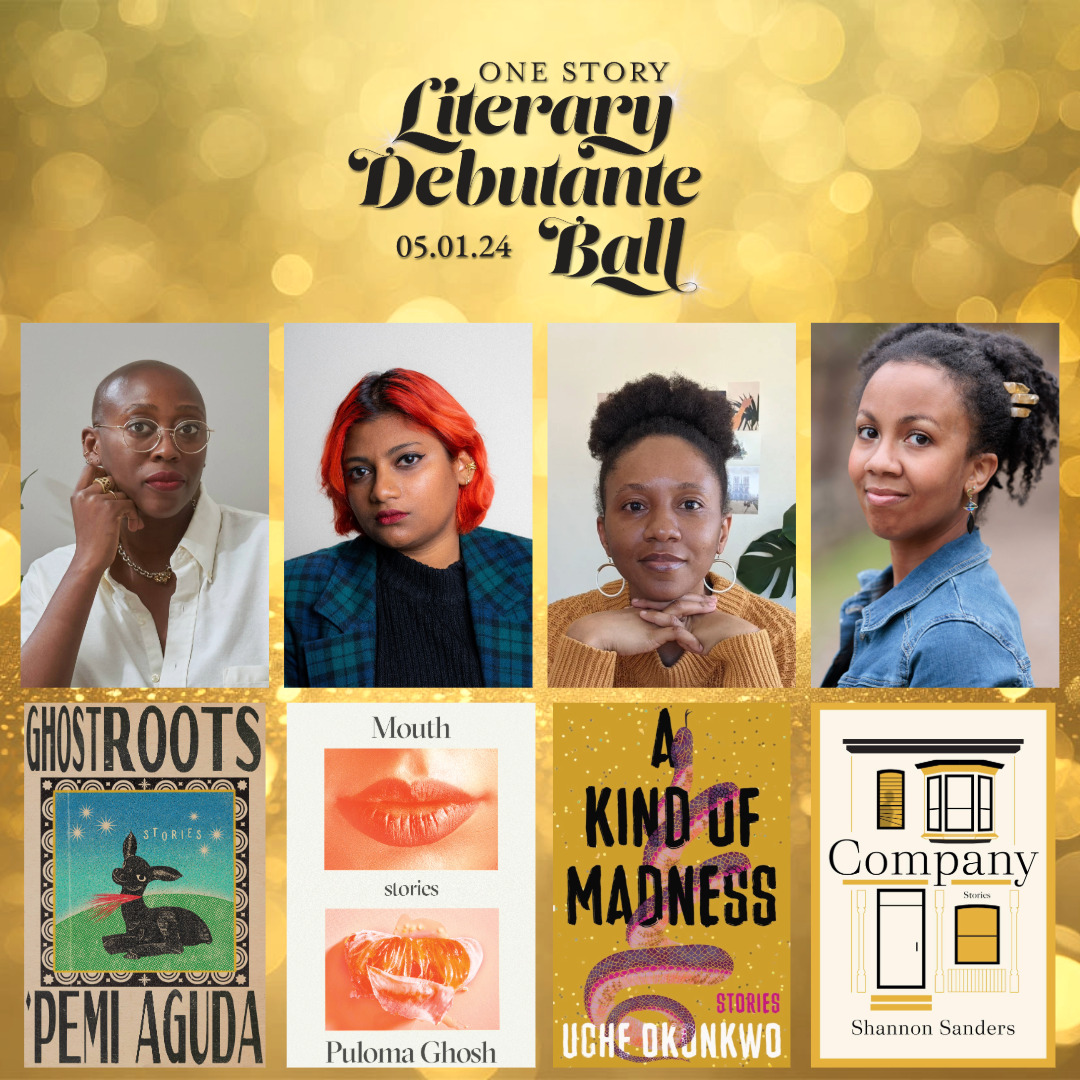
978-1-4000-6924-8(1).JPGOn June 6th, at our 4th Annual Literary Debutante Ball, One Story will be celebrating seven One Story authors who have published their debut books over the past year. As a lead up to the event, we have been introducing our Debs through a series of interviews about their debut book experiences.

This week we’re chatting with Leigh Newman, author of the memoir Still Points North, recently published by Dial Press. Leigh Newman made her One Story debut back in 2005 with her story, “Listening for Marianne.”

While the spotlight setting of Leigh Newman’s memoir Still Points North is the Alaskan countryside where she spent summers with her father, her story is one that anyone who’s navigated the choppy waters of adolescence will appreciate. Written with the clear eyes of an adult and the boundless elation of a child at heart, it’s a moving and vivid account of one woman fording the rivers of her own family history and living to tell the tale.

1. Where were you when you found out your first book was going to be published? How did you celebrate?

I was on the Brooklyn Heights promenade. I had a 3 week old newborn in a sling and a 3 year old son in the stroller. Both were very mad that day and badly positioned in their little fabric child-prisons. And yet…I chose to pick up the phone. As they wailed and fussed and raged, my agent quickly and professionally mentioned that three editors wanted to talk to me. My face fell off. I was unemployed, under-financed and totally over-hormoned. I wanted to weep but I don’t do that in public. Instead I talked to my agent for 3 minutes, hung up, and kept marching down the tidy brick path home. There, in our living room, I did a dance with my impressionable young children that’s best left to the imagination. Think of a gnashing of teeth, only joyful and with the occasional botched cartwheel. We topped it all off with a truly astonishing amount of gummy worms.

2. This is a memoir, rather than fiction. How did you decide to write it and do you approach the two mediums differently?

Failure can force your hand—right into a success or another star-spangled, soul-disfiguring failure. Because, of course, there’s momentum in failure, a rolling desperation that occurs in its wake—which either inspires you to do better or to just dive faster and more extravagantly towards to the bottom. Still Points North came directly out of that feeling. Prior to it, I had spent four years on writing a novel, and that novel was a bust. I couldn’t fix it and I was too afraid to start a new one and so I did the one option left, which is an option that most Alaskans are familiar with: do the thing you very much don’t want to do that might just save your life. In the wilderness culture that I grew up with, this is a literal sentiment: you have to dive into the cold fast-moving river and save the floating-away floatplane or lie there in a tent without moving until the bear attacks or wanders off. But here, it was metaphorical. I had to write a book I didn’t want to write or end the whole idea of writing. ….And so I wrote… all the while, screaming yuck. Who wants to talk about themselves? Not me. Not the people I grew up with. But as it turned out, I had a lot to say about king salmon and grizzlies and alders and homemade fish smokers and brave loving complicated families that fall apart. Because whether it’s a memoir or novel, there’s not really a difference in terms of how you tell the story. What you tell is different, because it’s life not fiction. But the way you tell it is the same. You show it, except when you have tell it. You get specific. You keep the good stuff and cut the rest.

3. The book spans a wide swath of time, from the summer after your parents’ divorce, when you’re eight, to when you’re grown up with children and a family of your own, with your relationship with your father acting as the through-line. What was it like to revisit these different periods of your life? Were some more fun or more painful than others?

Well, the parts about our unpressurized single-prop plane getting up to 20,000 feet and almost falling out the sky or about our dinky raft getting swamped in a rapid-filled canyon (with us in it) or about the bear that paid me an early morning visit were fun to write. There is joy to all that always-almost-dying that you do in the wilderness—provided that you survive. Writing about my dad and I tromping around in hip boots and fishing was also fun. I miss that life. The parts about my family falling to pieces, however, my own marriage falling to pieces, my mother’s breakdown and her other assorted mental issues were not so fun. I don’t want to sound flip. But they were not fun at all. I write at dawn, before anybody gets up and those were some dark mornings. Probably what kept me going was a maniacal feeling I had that if you write a memoir, you have to go all the way, otherwise the risk of exposure isn’t worth it. And there was a wee bit of grace. The people I was writing about loved me, and I loved them. I was lucky in this, despite all the mess and upheaval. And as I wrote, I began to fall in love with them, to fall in love with all of my family in the deep and all consuming way we usually reserve for romance.

4. There are beautiful descriptions throughout of the Alaskan wilderness. You live in New York now, a very different sort of place. Did you do anything particular to get yourself into that setting while writing? Revisit old pictures or take trips back?

I think I’m always in that setting, even when my body is somewhere else. So I didn’t look at anything except the slideshows in my mind. In fact, I was afraid of looking at anything—memoirs in general, or books of any kind about Alaska or websites about Alaska— because I suspected I would end up being so impressed with other people’s flora and fauna and nouns and adjectives and experiences, I would end up writing and thinking like them.

5. What was the revision process like for you? Do you have any advice for writers currently working on a book manuscript?

I had a great editor. She is brilliant and her name is Jen Smith. She did what every writer wants: she edited. And her process was show up at lunch and sort of explain very casually over midtown sushi what was going right…and wrong. She could do this in about 3 sentences. That’s all she needed. First the beginning was working, but the rest not so much. Then the beginning and end were working, but the middle not so much. And then I began working on the middle….. seasons changed, saplings turned to trees, little baby ducks grew up into fat big ducks, icebergs melted. And still the middle was not working. In fact, it was horrible. So Jen and her assistant Hannah (also an awesome editor) suggested we cut it. Just pull it out. And so….we did, we pulled 120 pages out of the center of the book. What was left were two stories—the love letter to my dad and the love story of me and my husband—positioned side by side, which let the reader make the connection between the two, without the book having to explain things overly. I love that! It’s perfect, which I can say because I didn’t think it up and I can’t take any credit for it. So listen to your editor. One other rule: read her comments, wait 3 days, then respond. On day one, they seem like madness. On day three, genius.

6. What are you most looking forward to about the One Story Literary Deb Ball?

The stairs. I find great comfort in NOT taking that elevator.

Introducing 2013 Literary Debutante: Ben Miller

RiverBendChronicle3DforLookoutOn June 6th, at our 4th Annual Literary Debutante Ball, One Story will be celebrating seven One Story authors who have published their debut books over the past year. As a lead up to the event, we have been introducing our Debs through a series of interviews about their debut book experiences.

This week we have the pleasure of talking to Ben Miller, author of the non-fiction book River Bend Chronicle: The Junkification of a Boyhood Idyll amid the Curious Glory of Urban Iowa, recently published by Lookout Books. Ben Miller made his One Story debut back in August 2002 with Issue #7, “The Man in Blue Green,” published during our first year.

Through his energetic, lyrical prose, Miller employs a brutal honesty to explore and uncover emotional truths about family and the self that many would never dare to reveal. His wry humor touches at the tragic in both life and memory in a way that makes it ever more visceral for the reader. What makes his words so potent beyond the beautiful language is his willingness to embrace the truth in all its beauty and its flaws, thereby echoing the shifting landscape of Iowa, where Miller spent his childhood.

1. You’ve been published in many journals, magazines and anthologies. How did it feel to recently publish your first book, River Bend Chronicle: The Junkification of a Boyhood Idyll amid the Curious Glory of Urban Iowa? How was this experience different? How did you celebrate?

Journal publications were one of many vital stepping stones on the circuitous path leading to the publication of River Bend Chronicle. In particular, Sven Birkerts and Bill Pierce of AGNI, Jackson Lears and Stephanie Volmer of Raritan, Robert Fogarty of Antioch Review, and Ben George and Emily Smith of Ecotone, supported this unusual nonfiction project at crucial junctures. And Steven Church of The Normal School also was there when it counted. These journals placed me in contact with editors who had helpful things to say, and the claws of expert chickens. They scratched productively at the urban sprawl of my sentences! The journals were a reality check for a project cruising–as I often put it to myself on lunchtime walks–into deep waters. It took more than ten years to create the material from which RBC was culled (though I often round the figure down to a nice crisp decade) and I can see now that I was preparing to grapple with complex urban Iowa subjects long before the writing began. The completion of the project involved so much more than word-mongering, submitting sections as they were finished, and reading everything from Carlyle and Sebald to Ozick and Wm. Hazlitt. It also demanded a re-wiring of the self to create a person determined and tough enough, as well as tender and open enough, to spin out lines into the murky depths of experience where the writer’s treasure awaits. And that arduous initial stage of pre-writing work would not have been possible had I not benefited from the full support of my spouse–distinguished poet Anne Pierson Wiese (and Deb Ball escort)–who did all in her power to aid my effort to do the personal work that needed to be done. (We’ve both worked full time jobs for nearly twenty years while pressing forth with our literary life. Proof positive that equals can mentor each other, too!) And when, after all these various stages of various sorts of work, I finally found the perfect publisher–Lookout Books (U. North Carolina Wilmington)–a press with the courage and passion and creativity to bring out the book as I envisioned it–photographs set like shadowy cliffs into prose tides–our appendages waved wildly! Even if you don’t have time to read the book, smell it. The paper contains clay, lending pages a supple feel, and sweet odor. That was publisher/designer Emily Smith’s idea. Imagine that, a book about a river city literally perfumed with silt! Such genius strokes have made my experience with Lookout Books revelatory. It’s why I’m hoping to be affiliated with those folks for many years. Art always came first. It was the prime consideration. What more could a writer ask for?

2. Your story “The Man in Blue Green” was published during One Story’s first year, Issue #7 in August 2002. What has happened since then? How have you grown as a writer since you published with us at One Story to now having your first book released?

2002! That’s a long time ago! Are you insinuating that I am the oldest debutante on record!? I am old, yet not that old either. At least, not as old as Miss. Havisham. Time is funny. Anyhow, I still like “The Man in Blue Green,” which eventually became the first chapter in a picaresque novel I developed in conjunction with RBC–a work exploring the meaning of place with equal detail/ferocity but from completely different angles. The project is set in an invented sixth borough of NY that serves as a refuge for those who have failed to succeed in other boroughs. Beleaguered citizens come to the Dronx either to gamely attempt resuscitating dead dreams or to hide from failures, live out the life of not trying, of giving up, of deforming grief. The text is supplemented by 25 b/w illustrations (ala old editions of Robinson Crusoe) by Dale Williams, a brilliant Brooklyn artist and longtime collaborator of mine. Like all of my projects, this one rests comfortably under a credo I have borrowed from the painter George Bellows: “Try everything that can be done. Be deliberate. Be spontaneous. Be thoughtful and painstaking. Be abandoned and impulsive. Learn your own possibilities.”

3. Your book is a work of non-fiction that deals close to home. Could you discuss the experience of writing the book itself and dealing with that precarious balance of truth and respect for the people represented in the work? The book resonates with a palpable honesty and you get at that truth with a no-holds-barred approach that I commend. Was the process difficult for you?

Writing about those close to us–or about identity-forging experiences (furious with meanings)–can be very rough going. Fairness and honesty are the goal, but hardly automatic, rather a gritty result of constant circumspection and questioning at every stage of the process. You’ve got to be, as I was, obsessed with getting it right. The obsession, though, was the easy part–it grew instantly out of the understanding of what was at stake for me as a writer, a son, a brother…when reaching for difficult childhood material. One thing I frequently say about River Bend Chronicle is that it was accreted in layers, each meshing with the others, and this slow organic near-to-oysterish process allowed me to capture some measure of a history’s delicacy–no dumbing down of contradictory realities I encountered as a youth, no convenient tidying up of a messy life to deliver a comforting but false message, no work of brittle judgment and dismissal or rude floodlight optimism–but rather a fluid and shameless presentation of family issues and 70s-era social confusion that fully acknowledges, and thus humanizes, the plight of each character–even those who make unfortunate mistakes which spread pain widely. Though I had a bizarre upbringing, at heart my stories of hapless neighbors and tragic relatives are stories of the shifting interplay of light and dark in lives, and for that reason they are universal. In order to get it right, I needed to just keep coming at my experiences with an ever wider lens to capture the nuances, keep coming to the task with humbleness, pressing against my limitations while concurrently understanding that they would never vanish, that I was no ultimate arbiter but a seeker of big truths that to some degree must always remain elusive.

4. In your first book, what challenges did you encounter that often do not appear in a shorter piece? How did you approach the book differently, both in its writing and editing?

The accepted book was entitled River Bend Album and consisted of an array of interlocking essays culled from a sea of autobiographical writing–the finished book contains only about 25% of pages produced since 2001. The pieces selected for the first manuscript draft had been published in good journals, were well-edited and–it seemed–set to go. Then something incredible and completely illogical happened. Something just crazy, though it fit in with many other things in my ass-backwards life. My editor and I agreed that three essays–though strong–did not belong in the book. We cut those pieces, and later, one more essay. We cut more than 40,000 words from the book and what was the result? We did not get a shorter book! We did not, in the end. We got what? We got a much longer book! For as soon as that material was removed, the remaining sections began talking to each other, pulling on each other like magnets. They began transforming beautifully. For example, an essay originally twelve pages grew to be almost fifty pages long and flowed from the back of the book all the way to the front, becoming a prologue: “Ghosts of the Mississippi.” My editors were agog but gallantly loyal. They have said to me since: “No one will believe how this book came to be.” (My wife would, though. She was there on Christmas Day when I was carving up the galley in my office.) That’s another part of what I’m trying to convey when I say that the art came first at Lookout–those involved in the project pushed far beyond prior boundaries of endurance: Emily Smith, Ben George, Beth Staples. Getting this book into its final form was akin to wrestling piggyback whales! Stumptown coffee was the drink of choice. For additional sustenance, I called on my rich memories of art created to the scale that I sought to replicate–the epic bar scenes in Ice Man Cometh and the stunning beginning of Eudora Welty’s Delta Wedding, which finds a child whose mother has died taking a train by herself to the big event–a slow, beautiful, melancholy ride, scenery and emotions intermingling, the fear and the trees and the love and the fence blurs.

5. Your book has a wonderful title. How did you come up with it?

Lookout is the nation’s foremost teaching press. This means that the professional staff has at its disposal an amazing gang of enthusiastic and talented interns. At times, more than ten individuals were substantially contributing to some element of my book’s birth–fact-checking, promotion, design, editorial. When we started batting around possible subtitles, the students were a ready-made focus group providing invaluable responses to my ideas and those of the editors. Getting the right subtitle was particularly tricky because this work–which I often refer to as my first, second and third books wrapped into one–contains so much. It is not only the story of a fragmenting family, but also the tale of a city and America in a difficult era. Tonalities in the text are dynamic, zagging from humor to disaster in a sentence. The subtitle is an audacious tip to the reader about the nature of the adventure ahead. “Junkification…” and “Idyll…” = a tension of plastic and classic.

6. What are you most looking forward to about the One Story Literary Debutante Ball on June 6th? More important, are you going to sport one of those cool bow ties inherited from Mr. Hickey that you have been posting on your blog?

Firstly, I’m looking forward to pinning on my origami corsage. In my office in a special place, I keep handmade corsages from previous balls–they make me smile. I’m not yet sure exactly what outfit I’ll be wearing, but it will of course include one of Mr. Hickey’s fabulous bow-ties. On my arm will be that mentor of mine–and wife of 23 years, Anne Pierson Wiese–and lest any rumors start flying, she did not seduce me at AWP, although her initials APW are quite near to AWP. We met as grad students at NYU, married in Brooklyn, and have since been partners in love and literature–respecting the important place writing occupies in our respective lives, giving each other the gift of space that growth requires. I’ll be so proud to be there with her, author of Floating City, and with others who have supported me over the decades that I have been striving to make work, and see it off into the world.

Introducing 2013 Debutante: Manuel Gonzales

MiniatureWifeOn June 6th, at our 4th Annual Literary Debutante Ball, One Story will be celebrating seven One Story authors who have published their debut books over the past year. As a lead-up to the event, we’ll be introducing our Debs through a series of interviews about their debut book experiences.

This week we’re talking to Manuel Gonzales, author of the collection The Miniature Wife, published by Riverhead Books. The Miniature Wife includes the innovative story Manuel published with One Story, “Pilot, Co-Pilot Writer,” which tells the hilarious, strange and moving story of a writer trapped on a hijacked airplane–circling Dallas–for 20 years.

Gonzales is the Executive Director of the Austin Bat Cave, a great non-profit organization that offers writing classes for children and teenagers in Austin, TX. So it’s no wonder that his stories are chock full of wild creatures–unicorns, zombies, and even werewolves. As the LA Times said in their review of the book: “Manuel Gonzales is a writer who can’t wait for the next, magical thing to surprise him—so he makes them happen, in the big Texas sky of his abundant imagination.”

Your collection includes, “Pilot, Co-pilot, Writer,” which you published with us in One Story. What happened from when you published in One Story to when your first book was accepted?

I wrote that story in late 2004 and it was published in late 2005. I was in the middle of writing or trying to write a novel when this story was published, a novel that I spent maybe five years writing and rewriting, but that I could never pull together, regardless how many drafts I wrote. I was living in Houston, and then moved with my wife and daughter back to Plano, where we lived for a year at my parents’ house while I continued to work on the novel, and then we moved to Paris, TX, where I worked more on the novel, lost a job working from home, became, briefly, a high school English teacher, quit work on the novel, went back to stories I wrote during and right after grad school, tried to look for a book in them, wrote more stories to make them into a book, and then I, when I finally did, tried to find the right agent for them. So. Seven years and six novel drafts and nine new stories later, the book was accepted at Riverhead. 

Your collection showcases enormous imagination and inventiveness yet manages to remain grounded in story and the details of everyday life. How have you learned to exercise such restraint while working with wild ideas? How do you keep your concepts and premises from running away with things?

What helps keep these ideas from running away from the story I want to tell is that I’m mostly interested in the characters and the details of their every day lives, in how these lives must continue functioning in the face of the apocalypse or total body paralyzation or the purchase of a unicorn, how these things don’t ever really take away the deep-seated problems or concerns facing these people, their relationships with each other, and in fact might make them worse.

Do you write stories to explore ideas or do you come up with ideas in order to write stories? Is this a false binary?

I’ll plead the third (option). I do both. I’ll write a story based on an idea and sometimes I start a story without any idea but a character or a line in mind, and then as the story moves forward, I’ll recognize ideas I’ve explored in the past or that are new ideas but pretty clearly present in hindsight. Take “Pilot”. I had the idea while traveling a lot for work that I felt like I was on a plane constantly and that I wouldn’t ever not be on a plane and then played around the idea of how I would act or how a person would act if actually in that situation. But also a lot of what’s going on in this story—looking back at it now—there’s a strong sense of stasis, of circling, and looking back at that time—I had recently left New York and my circle of friends, had been having difficulties working with my literary agent, felt myself stuck in a distant and barren suburb of Houston, in a job that wasn’t fulfilling, was little more than work — I mean, looking back at that moment in my life, it’s almost more surprising that I didn’t write twenty stories about circling a city in an airplane.

Do your stories or characters ever surprise you? Has the writing of a particular piece caused you to view what you were writing about differently?

What’s usually surprising to me is that moment when the story becomes a story. Often I’ll have an idea or a character in a situation–trapped on a plane forever, told from the point of view of the zombie, the African continent sunk into the sea–but I won’t know very much else, won’t have a direction, won’t have a story itself, and I’ll put these characters through paces, or I’ll play around with language, and then I’ll write a line or a phrase–everything went dark, I got the notion I should steal this creature from them–and suddenly this weird, amorphous piece of writing I’ve been working on is suddenly a story, has a shape that I can see. Every time that happens, and every time it’s a surprise, a thrilling surprise.

Your collection features a number of pieces written in the style of a non-fiction profile and I’ve read elsewhere it’s one of your favorite forms to read as well. What is it about the non-fiction profile piece that piques your interest as a writer and as a reader? 

As a writer, I love the ability a person writing non-fiction has to simply lay out details of a person or a situation. There is no fictional trickery or obfuscation, no worry of show don’t tell with the nonfiction essay. That straightforward, declarative sentence is amazing fun to work with in fiction but you can’t usually get away with when writing a short story. I mean, nonfiction writers have the benefit of writing from facts, and so of course readers are going to be inclined to suspend disbelief because the intention is straight belief without any suspension. As a reader, I love the ability great nonfiction writers have of taking something so rigid and potentially anti-narrative as facts and crafting an affecting story out of them.

What are you looking forward to the most about the One Story Literary Debutante Ball on June 6th?

Buying a kickass ball gown. It’s funny because the coming out party, or the debutante ball, is huge in Mexican culture, with the quinceañera, but that’s reserved just for girls, and also my parents didn’t really get into that when my sister and I were kids, but still. Here is my chance to horn in on that quinceañera action. Also, it’ll be a great party and a lot of fun connecting with good friends I don’t see often enough and making new friends with the other debs, and to do all of this and also help support an outfit like One Story Magazine makes the perfect kind of sense.

How to Write Beginnings & Endings

Mirror.ReflectTomorrow is the final day to apply for the One Story Summer Workshop for Writers (July 14-19th, 2013 at the Center for Fiction in NYC)!!

Last week, One Story gave a “taste-test” of our workshop by hosting a free craft lecture, given by One Story Editor in Chief Hannah Tinti. Over fifty eager writers joined One Story in Brooklyn at our  home, the Old American Can Factory, for wine,  beer, snacks, and an engaging talk on how to write beginnings and endings.

In her lecture, Hannah started by comparing the first page of a short story to a first date. Imagine you’ve just asked out your reader. You’ll want to shower, dress up and look your best (fix that grammar & improper semi-colon). You don’t want to be boring (make something interesting happen on the first page). You don’t want to over-share (don’t over-burden the reader with too much back-story–save that for pages 2-3). You want there to be a second date (i.e.–for the reader to keep reading), so be sexy, mysterious, fun and most important: yourself. But: how can a writer make that happen on the page?

  • Write with authority–clear, confident sentences.
  • Set the stage–make the setting/place vibrant right away so the reader gets oriented.
  • Introduce the major characters–so the reader knows who the players are.
  • Start with action–early active scenes will capture the reader’s interest.
  • Establish the characters’ emotional situation–all stories are about something changing–show the reader how things look “before” this change.
  • Hint at the overall intention of the piece–what is this story going to be about?

For examples, Hannah pointed to a few opening lines from the masters:

The last time I saw my father was in Grand Central Station.–“Reunion” by John Cheever

In walks these three girls in nothing but bathing suits. I’m in the third checkout slot, with my back to the door, so I don’t see them until they’re over by the bread.–“A&P” by John Updike

She flicked her wrist neatly out of Doctor Harry’s pudgy careful fingers and pulled the sheet up to her chin. -“The Jilting of Granny Weatherall” by Katherine Anne Porter

A look at these first lines shows how quickly the necessary orientation can take place. The shortest is perhaps the most powerful. With just twelve words, Cheever introduces the main characters–a father and son, their relationship–tenuous at best, and setting–Midtown Manhattan. Instantly, intriguing questions pop into the reader’s mind.

Although first dates are often full of hope and excitement, nearly all break-ups are horrible. There is a big dramatic fight, or a mean text-message, or worst of all: radio silence. In this same way, Hannah explained, many short stories end badly, without the proper resolution, leaving readers unsatisfied or confused. The best endings are thoughtful and meaningful, respectful of readers and emotionally moving, right up to and even past the final page. Here’s a few tricks Hannah shared to help make this happen:

  • Slow down time on the page, by lengthening descriptions and paragraph length, as well as cutting down on dialogue.
  • Focus on the main theme of the story without being too obvious.
  • Use the five senses in the last two paragraphs to bring emotional clarity without being overly-explicit. It allows the reader to experience a situation alongside the character. To feel what they feel.
  • Like a well-written obituary, or a moving memorial service, the ending of your story should leave a resonance, an echo that continues and stays with the the reader even after they’ve put down your book.

Now let’s take a look at the last lines of our master stories:

Goodbye, Daddy,’ I said, and I went down the stairs and got my train, and that was the last time I saw my father.–“Reunion” by John Cheever

I could see Lengel in my place in the slot, checking the sheep through. His face was dark gray and his back stiff, as if he’d just had an injection of iron, and my stomach kind of fell as I felt how hard the world was going to be to me hereafter.– “A & P” by John Updike

Oh, no, there’s nothing more cruel than this—I’ll never forgive it. She stretched herself with a deep breath and blew out the light.– “The Jilting of Grannie Weatherall” by Katherine Anne Porter

Hannah went through all of these endings, but for time I’ll just repeat her close read of “Reunion.” Rather than finish with the father’s drunken antics, Cheever adroitly takes the first words of the story, and reuses them as the last words, creating a circular structure. This implicitly brings the reader back to the beginning of the story, reminding him of the journey taken, and underlining the words–”the last time”–which now hold greater meaning.

Like mirrors, Hannah later explained, the beginning and ending of a story should reflect everything that has happened in the story. The best writers re-write their first and last paragraphs over and over, until they gently echo each other, creating the sense of “infinity” of two mirrors, facing one-another on opposite walls (see pic above).

Wish you were there that night? Ready for more talks like this one? Then it’s time to submit to the One Story Workshop for Writers, an intensive learning experience from July 14th to 19th, where you’ll get a great lecture like this everyday, along with an intense morning workshop and evening panels with editors, agents, and MFA directors. We hope you take advantage of this opportunity and join us this summer. The deadline to apply is April 30th–tomorrow at midnight! Visit our website for more information. And many thanks to our Chief Hannah Tinti, for providing us all with this fun and informative night of starts and finishes.

Introducing 2013 Debutante: Claire Vaye Watkins

WatkinsOn June 6th, at our 4th Annual Literary Debutante Ball, One Story will be celebrating seven One Story authors who have published their debut books over the past year. As a lead up to the event, we’ll be introducing our Debs through a series of interviews about their debut book experiences.

This week we’re talking to Claire Vaye Watkins, author of the collection Battleborn, which recently won the 2013 Story Prize, and was published by Riverhead Books. Battleborn aso includes the story Claire published with One Story—“Man-O-War”.

The 10 stories in Battleborn explore the past and present of the American West, specifically Nevada, where Watkins spent much of her childhood and adolescence. As Antonya Nelson said in The New York Times: “Readers will be taken into the hardship of a pitiless place and emerge on the other side — wiser, warier and weathered like the landscape.”

1)     How did your celebrate when you found out that your first book, Battleborn, was going to be published?

I can’t really remember. The auction for Battleborn took a few days, so by the time the whole thing shook out and I had an official publisher, I’d been on something of a bender for some time. It was quite demanding.

2)    You published a story, “Man O’ War”, with One Story in 2010. What happened between the time of the One Story publication and the time of your book’s release?

“Man-O-War” came out in September of 2010, and I sent my agent the complete collection at the end of September. Riverhead Books bought the collection about a month later, around Halloween. (I remember this because I was shopping at a thrift store for a Halloween costume when I got the call from my agent that started that happy, taxing bender.) Between then and the book’s publication in August 2012 I got a tenure-track job, moved to Pennsylvania from Ohio where I’d been doing my MFA. I started teaching at Bucknell University, traveling back to Nevada whenever I could for research on this novel I’m writing and to generally replenish the well. I did some traveling in advance of the book’s release, out West, on the East Coast and very briefly in Europe. Mostly I just sat at home in Pennsylvania reading and wondering if there was something I should be doing.

3)     You’ve talked a bit about a project you’re working on that offers writing classes to kids in rural Nevada. Can you talk a bit more about the inspiration and vision of this project?

The idea for the Mojave School came to me when I was teaching high school students at a creative writing summer camp. The students there would say things like, “I never knew it was okay to want to be a writer,” and their epiphanies reminded me of my own, which visited me as a teenager attending Shakespeare camp at the Utah Shakespearean Company. In retrospect, I saw that that experience was seriously vital for me as a writer because it was the first time I met a bunch of other kids and adults who’d dedicated their lives to books and art. But I’d gone to Shakespeare camp on scholarship, and the camp where I was teaching years later cost just under $2,000. I thought it was such a bummer that no one from my hometown, Pahrump, Nevada, would get to come to a camp like the one where I was teaching. I was saying all this to my then-boyfriend, Derek Palacio, and he said very slyly, “Gee, someone should do something about that…” And so we decided we would.

4)     What advice would you give young writers who are working on their first book? 

When I was an ambitious young MFA student I sometimes felt frustrated that Ohio State’s MFA program didn’t seem to do much to “professionalize” us, meaning teach us about the publishing world and how to work it so our books got published. We spent just 1 day a year talking with editors or alums about “how to get published.” Now that I have a book out it’s completely clear why our time was structured this way: because all the publishing savvy and insider connections in the world can’t make you a better writer. I know this is easy to say from my vantage point, but trust me: constantly worrying about getting published is wasted energy and a drain on your very soul. I’m now tremendously glad I was educated the way I was, encouraged to obsess only about the writing, the writing, the writing, and not about who would buy it or how. So I’d advise new writers to spend 364 days a year on writing the best damn thing they possibly can, and maybe 1 worrying about how to get it out there.

5) What are you most looking forward to about the One Story Debutante Ball?

The outfits!

Issue #177: The Messenger Who Did Not Become a Hero

177-cover_Page_01 (457x640)Our new issue is by Douglas Watson, one of our 2013 Literary Debutantes. “The Messenger Who Did Not Become a Hero” appears in his forthcoming debut collection, The Era of Not Quite, which will be published by BOA Editions next month. Part fable, part comedy, and part philosophical meditation, “The Messenger Who Did Not Become a Hero” reminded me of one of my favorite authors, Italo Calvino. I’m thrilled to have Douglas Watson in our pages, and excited to celebrate his debut  on June 6th at the 2013 Literary Debutante Ball. Now I’ll turn the mic over to Will Allison, who found this remarkable story and brought it to our shores. –HT.

Many years ago, when I was working in Cincinnati at a magazine called Story, our wise old contributing editor, Max Steele, said to me, “Will, I have never seen a story that could not be improved by editing.” I took those words to heart, not only as an editor but as a writer. To this day, it frankly makes me nervous when an editor accepts work of mine as-is.

Here at One Story, we pride ourselves on thorough editing. Sometimes we go back and forth with an author through multiple revisions before we feel the story is just right—a process that can take upwards of a year. At the very least, Hannah and the issue editor give every story a good, hard scrub, with plenty of editorial suggestions.

But then there’s the story in our current issue, Douglas Watson’s “The Messenger Who Did Not Become a Hero,” a brilliant, funny, heartrending tale of a king’s messenger who finds his life turned topsy-turvy just when he thought he was more or less done living. (Be sure to read our interview with the author.)

The day after we accepted the story, I sat down with my editorial scrub brush and went to work—only to discover, after several reads, that I had not a single meaningful editorial suggestion to offer. Not a one.

Usually, when I don’t see ways to make a story better, I assume I’m blinded by my admiration for it, and I rely on Hannah to bail me out, to see what I don’t. But this time, Hannah didn’t have any edits either.

I don’t, of course, mean to suggest that Douglas’s story is un-improvable. That I didn’t see how to improve it is as much a testament to my shortcomings as an editor as it is to his strength as a writer and editor of his own work. If anything, “The Messenger Who Did Not Become a Hero” is the exception that proves the rule—and yet it’s also a reminder (my apologies, Max!) that now and then, we editors should just leave well enough alone.

Introducing 2013 Literary Debutante: L. Annette Binder

rise_cover (415x640)On June 6th, at our 4th Annual Literary Debutante Ball, One Story will be celebrating seven One Story authors who have published their debut books over the past year. As a lead up to the event, we’ll be introducing our Debs through a series of interviews about their debut book experiences.

This week, in our first installment, we had the pleasure of speaking with L. Annette Binder, author of Rise (Sarabande Books), a stunning collection, published in August 2012, that includes the story she published with One Story—“Nephilim”—which won a 2012 Pushcart Prize, and was later performed live on stage and later broadcast on the Public Radio Program, Selected Shorts.

The stories in Rise are fairy tales, except that the witch, lucky Hans, and the frog prince are all characters at the fringes of everyday life. There are rockets, swells of starlings, and children who disappear into thin air. These are stories where a man can be blind and still see the stars. L. Annette Binder writes magical tales with authority and restraint, and we believe her stories, every one.

1) How did you celebrate when you found out your first book was going to be published?

I got a voicemail on a Friday in May from Sarah Gorham at Sarabande Books saying she had a very important message for me but she was travelling and wouldn’t be able to get back in touch with me until Monday. That was a long, long weekend. I hoped it meant I’d won the Mary McCarthy Prize but I’m a little superstitious and didn’t want to jinx myself. When Monday finally came and I found out the good news, I celebrated over dinner with my husband and some L.A. Burdick chocolate mice. I have a wicked sweet tooth, and chocolate always plays a major role in every happy moment.

2) Your collection includes, “Nephilim,” which you published with us in One Story. What happened from when you published in One Story to when your first book was accepted?

It was only five months between “Nephilim” coming out and my collection getting accepted, but so much happened in those months. I found my agent Claudia Ballard, who had read the story and reached out to me. The same weekend I found out about the book I also found out “Nephilim” won a Pushcart. I credit One Story with so many of the good things that have happened with my writing over the last few years. One Story reaches a huge number of readers who are passionate about the form, and I still get kind notes from people who have read the story in a back issue or online.

3) During the editing of Rise was there any single piece of advice you received or perhaps remembered from earlier in your career that helped ease the process?

The folks at Sarabande were great during the editing process. They helped me winnow the collection while being receptive to what I was trying to do on a sentence level. In general, the writing advice that helps me during the revision stage is—be open to criticism, but trust your own instincts.

4) I’ve read that you are you are currently working on a novel that grew out of one of the stories in your collection, “Dead Languages,” which I loved. In general, how do you know when you are done with writing a story, or when you need to keep working on it? Would you say that revision is an overwhelming part of the process? Which story in your collection was the hardest to revise?

I usually know when a story is done by the feeling of relief that I have when I write the final scene. Revision is something I really enjoy, though I’m a slow writer—glacially slow—and I revise each sentence multiple times as I’m working on the first draft. By the time I have a completed draft and start revising, I’m usually looking less at prose rhythm and more at structural issues and adding beats where they’re needed.

Some stories, like “Nephilim,” went very fast and required little revision. Others were much more challenging. “Lay My Head” was the hardest to revise by far. I added beats and took some away, and the ending flipped several times—between the fairy tale beat and the current scene where Angela’s mother carries her to the car.

5) What are you looking forward to the most about the One Story Literary Debutante Ball on June 6th, 2013?

Everything!  Meeting writers I admire, spending time with Michelle Latiolais, who has been a wonderful mentor to me, visiting New York, which always makes me saucer-eyed, and wearing a fancy dress.

One Story’s 2013 Mentor of the Year: Dan Chaon

Dan Chaon (427x640)One Story is thrilled to announce our 2013 Mentor of the Year: Dan Chaon.

At One Story, we believe that being a part of the literary community is all about turning around and offering a helping hand to the ones behind you. In that vein, each year at our Literary Debutante Ball we honor one established author with a “Mentor of the Year” award for their extraordinary support of other writers. Last year, our honoree was Ann Patchett. The year before, it was Dani Shapiro.

Mentoring is the kind of work that happens behind the scenes, but is vital to keep the literary world alive and kicking. It comes in all forms—from teaching, to blurbs, to recommendation letters, to late-night reads, agent advice, one-on-one conferences, career guidance and inspiration. Behind every book on every shelf is an unseen mentor, giving an author the boost they need to get over the publishing wall.

Dan Chaon exemplifies this kind of gallant hard work and good-soul-manship, and we’ll be honoring him, along with our Literary Debutantes, on June 6th, 2013 at the One Story Literary Debutante Ball. Tickets for the Ball will go on sale on May 9th.

Dan Chaon’s most recent book is the short story collection Stay Awake (2012), which was a finalist for the Story Prize. Other books include the national bestseller Await Your Reply, which was named one of the ten best books of 2009 by Publisher’s Weekly, Entertainment Weekly, the American Library Association and others; the short story collections Fitting Ends and Among the Missing, which was a finalist for the 2001 National Book Award, and the novel You Remind Me of Me. Chaon’s fiction has appeared in Best American Short Stories, The Pushcart Prize Anthologies, The Year’s Best Fantasy and Horror, and The O. Henry Prize Stories. He has been a finalist for the National Magazine Award in Fiction, and he was the recipient of an Academy Award in Literature from the American Academy of Arts and Letters. Chaon lives in Ohio and teaches at Oberlin College, where he is the Pauline Delaney Professor of Creative Writing and Literature.

Beginnings & Endings: A Free Craft Lecture by Hannah Tinti on April 18th!

Ending.Beginning Please join us for a wine and cheese reception and a free craft lecture on beginnings and endings by One Story Editor-in-Chief Hannah Tinti. This event is presented by the One Story Workshop for Writers.

Where: Our home: The Old American Can Factory 232 3rd St. Brooklyn, NY 11215

When: Thursday, April 18th, 6:30pm

This night is a rare example of the insightful lectures and events that will be held during the One Story Workshop for Writers from July 14-19th, 2013. This intimate 6-day workshop is for writers who are considering the next step in their career, be it an MFA program or a residency or balancing the demands of a full-time job while sending out work. In addition to morning workshops taught by former Associate Editor Marie-Helene Bertino and current Contributing Editor Will Allison, each afternoon will include a craft lecture, and each evening a panel discussion on a specific area of publishing or a reading. Go here for more information. DEADLINE to apply to the One Story Workshop for Writers is: APRIL 30TH!!

Workshop Coordinator Michael Pollock will also be at this event to answer any questions you might have about the workshop, and what it can offer writers in any stage of their careers. Please join us, it is sure to be an enlightening and fun night! No RSVP necessary. Email michael@one-story.com for more information.

If you’re not in the area, or can’t attend, we’ll be posting a wrap-up of the event in the week after at our blog so stay tuned!